How To Create a Content Strategy Framework For Your Website

A content strategy framework is a plan that guides you on how to create and optimize your website’s content. So that it can achieve your online goals and provide value to your audience. 

A content strategy framework can help you align your content with your brand identity. Helping you create content resonating with your audience’s needs, preferences, and expectations. It can also help you improve your website’s performance and results. Such as ranking, traffic, conversions, and revenue. 

In this article, we will explain what a strategy framework is and why it is important. We’ll also see how you can create one for your website.

What is a Content Strategy Framework?

Content Strategy Framework

It is a document that outlines the key elements and steps of your content strategy, such as:

  • Content audit: This is the process of reviewing and analyzing your existing content. To identify its strengths, weaknesses, opportunities, and threats. 
  • Content goals: This is the process of defining and setting your content goals. Which are measurable outcomes that you want to achieve with your content. 
  • Content audience: This is the process of understanding your target audience. And understanding how you can provide value and solutions to them. 
  • Content topics: This is the process of finding and selecting the best topics for your content. Based on your niche, audience, and competitors. Topics are the main ideas or themes that your content covers. They should be relevant, interesting, and useful for your audience. 
  • Content types: This is the process of choosing the best types and formats for your content. Types and formats are the ways that you present and deliver your content. They should be suitable and effective for your content’s purpose and message. 
  • Content creation: This is the process of producing high-quality content for your audience. Your content should be original, relevant, informative, and entertaining. It should provide value and solutions to your audience’s needs and problems. 
  • Content optimization: This is the process of applying the best practices of SEO to your content. So that, it can rank higher on search engines and drive more organic traffic to your website. 

Why is a Content Strategy Framework Important?

A content strategy framework is important for various reasons, such as:

  • It can help you create and manage your content more effectively. It can provide you with a clear and structured plan and guide. Which can help you avoid any confusion, inconsistency, or duplication in your content.
  • It can help you align your content with your brand identity, tone, and voice. Also helps you define and set your content goals.
  • It can help you improve your website’s performance and results. Such as ranking, traffic, conversions, and revenue. As it can help you create and optimize your content for your target keywords and topics. And for your audience and search engines. It can also help you distribute and efficiently measure your content.

How to Create a Content Strategy Framework for Your Website?

Creating a content strategy framework for your website? You should follow these steps:

Conduct a Content Audit

The first step is to review and analyze your existing content. To identify its strengths, weaknesses, opportunities, and threats. You should use various tools and methods to collect and organize your content’s data. 

You should also check your content’s quality, relevance, consistency, and effectiveness. Also how it matches your online goals and your audience’s needs. You should also discover and fix any content gaps, issues, or errors. Focus on them according to their importance and urgency.

Define Your Content Goals

The next step is to define and set your content goals. What are the specific and measurable outcomes that you want to achieve with your content? 

You should use the SMART criteria. It means Specific, Measurable, Achievable, Relevant, and Time-bound, to create your content goals. And align them with your business and marketing goals. 

For example, your content goal could be to increase your website’s traffic by 20% in the next three months or to generate 50 new leads per month from your content. 

You should also identify and select the key performance indicators (KPIs), which are the metrics that can help you measure and track your content’s progress and success, such as ranking, traffic, conversions, and revenue.

Know Your Content Audience

The next step is to understand your target audience. 

You should conduct thorough research and analysis of your audience, using various methods and tools, such as surveys, interviews, focus groups, analytics, and personas. 

You should also segment your audience into different groups and types, based on their demographics, psychographics, behavior, and situation, and create content that is relevant and tailored to each segment. 

Choose Your Content Topics

The next step is to choose your content topics, which are the main ideas or themes that your content covers, and that are relevant, interesting, and useful for your audience. You should use various tools and techniques, such as keyword research, topic research, brainstorming, and mind mapping, to discover new topic opportunities, identify topic difficulty and demand, and organize your topics into categories and subcategories. 

Choose Your Content Types

The next step is to choose your content types and formats, which are the ways that you present and deliver your content, and that are suitable and effective for your content’s purpose and message. 

Create Your Content

The next step is to produce high-quality and engaging content for your audience, based on your topics and types. Your content should be original, relevant, informative, and entertaining, and it should provide value and solutions to your audience’s needs and problems. 

Optimize Your Content

The next step is to apply the best practices of SEO to your content. So that it can rank higher on search engines and drive more organic traffic to your website. You should also use various tools and resources, such as SEO tools, SEO services, and SEO experts, to help you optimize your content.

Distribute Your Content

The next step is to promote and share your content with your target audience and potential customers. Using various channels and platforms, such as email, social media, search engines, and online communities. Content distribution can help you increase your content’s reach and exposure, attract and retain your audience’s attention and interest, and generate more traffic and conversions for your website. 

Measure Your Content

The final step is to track and analyze your content’s performance and results, such as ranking, traffic, conversions, and revenue. 

Content measurement can help you measure and improve your content’s effectiveness and ROI, and provide you with insights and feedback that can help you optimize your content strategy and goals. 

You should also use various tools and methods, such as Google Analytics, Google Search Console, or other SEO tools, to access and visualize your content’s data and metrics, such as impressions, clicks, bounce rate, and average position, and generate and export reports and insights.

Content Strategy Framework: Final Words

A content strategy framework is a vital and useful way to create, manage, and optimize your website’s content. 

It can help you align your content with your brand identity, tone, and voice, and with your audience’s needs, preferences, and expectations. A framework can also help you improve your website’s performance and results, such as ranking, traffic, conversions, and revenue.

Looking to enhance your online presence and captivate your audience with a stunning website? Our expert web design services are tailored to your unique needs. Contact us today to elevate your brand and leave a lasting impression on the digital landscape. Your success is just a click away!

SEO Company: 10 Best In The Business For Enhanced Visibility

If you have a website or an online business, you know the importance of ranking high on search engines. Such as Google, Bing, or Yahoo. Search engines are the main source of web traffic. As they help users find the information, products, or services they are looking for. But, ranking high on search engines is not easy. There are millions of websites competing for the same keywords and topics. That’s why you need an SEO company to help you optimize your website and improve your online presence.

How an SEO Company Can Help Your Business

An SEO company is a company that specializes in search engine optimization (SEO). Which is the process of improving the quality and quantity of web traffic. It is done by making your website more relevant to your target audience. An SEO company can help you with various aspects of SEO, such as:

Keyword Research

This is the process of finding and analyzing the best keywords for your website. Based on your niche, audience, and competitors. Keywords are the words and phrases that your audience uses to search for information. It could be about your products or services. Your content is much more findable for customers if you use the correct keywords.

Content Creation

This is the process of producing high-quality content for your website. Based on your keywords and topics. Your content should be original, relevant, informative, and entertaining. It should provide value and solutions to your audience’s needs and problems. 

Your content should also follow the best practices of content writing. Such as using clear and concise language, writing short paragraphs, and avoiding hard-to-read or redundant words.

Content Optimization

This is the process of applying the best practices of SEO to your content. So that it can rank higher on search engines and drive more organic traffic to your website. 

Content optimization involves various techniques. Such as using your target keywords strategically throughout your content. Especially in your title, headings, introduction, conclusion, and meta tags. Optimizing your content’s length, density, and frequency, according to your topic and audience. Optimizing your content’s speed, security, and mobile-friendliness. 

These are some of the factors that affect your content’s performance and user experience.

Technical SEO

This is the process of optimizing your website’s technical aspects. Such as speed, security, mobile-friendliness, and crawlability. 

These are some of the factors that affect your website’s performance and user experience. And influence your ranking and traffic. 

Technical SEO involves various techniques. Such as fixing any technical issues that can affect your website’s performance and user experience. Such as broken links, slow-loading pages, missing or duplicate meta tags, and sitemap and robots.txt errors. 

Using HTTPS protocol. It is a secure and encrypted connection that can protect your website and your user’s data from hackers and cyberattacks. Using responsive design. It is a design that can adapt to different devices and screen sizes. It also provides a smooth and satisfying experience to your users and search engines. 

Link Building

This is the process of building and managing your website’s backlink profile. Which is one of the most important ranking factors for search engines. 

Backlinks are links from other websites that point to your website. They can show your website’s relevance and authority. Link building involves various techniques. Such as finding and acquiring quality and relevant backlinks from authoritative and trustworthy sources, monitoring and analyzing your backlink data, and avoiding and removing toxic and spammy links that can harm your website’s reputation and ranking.

Analytics and Reporting

This is the process of measuring and tracking your website’s SEO performance and results. Such as ranking, traffic, conversions, and revenue. 

Analytics and reporting involve various tools and methods. Such as using Google Analytics, Google Search Console, or other SEO tools to access and visualize your website’s data. Such as impressions, clicks, bounce rate, and average position. And generate and export reports and insights that can help you improve your SEO strategy and ROI.

How SEO Company Can Be Beneficial for Your Business

As you can see, SEO is a complex and time-consuming process, that requires a lot of knowledge, skills, and tools. That’s why hiring an SEO company can be a smart and cost-effective decision. It can provide you with the following benefits:

Save Time and Money

Firstly, by hiring an SEO company, you can save time and money. As you don’t have to spend hours and resources on learning and doing SEO yourself. You can focus on your business, while the SEO company takes care of your website’s optimization.

Get Expert Advice and Guidance

Secondly, by hiring an SEO company, you can get expert advice and guidance. As you can work with experienced and qualified SEO professionals, who have the latest knowledge and tools of SEO. Also, those who can provide you with customized and effective SEO solutions, that suit your needs and goals.

Get Better Results and Outcomes

Thirdly, you can get better results and outcomes. You can benefit from the SEO company’s proven and successful SEO strategies and techniques. It can help you improve your website’s ranking and visibility. Furthermore, it can also increase your website’s traffic and conversions.

Top 10 SEO Companies to Boost Your Online Visibility

Here are the top 10 SEO companies that can help you achieve your online goals and provide you with the best results.

1. WebFX

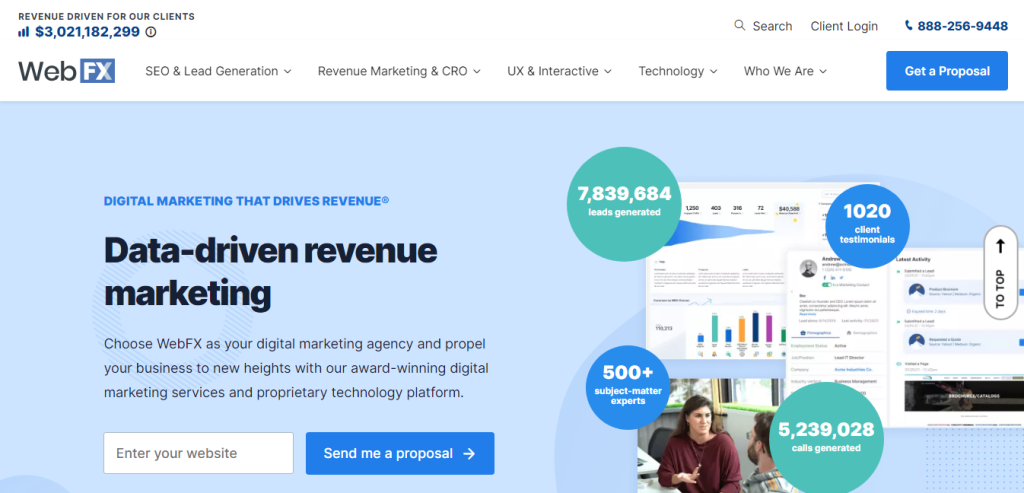
WebFX is one of the leading SEO companies in the industry, with over 20 years of experience and more than 1,000 satisfied clients. WebFX offers customized and effective SEO solutions, that can help you increase your website’s ranking and visibility, drive more organic traffic, and generate more leads and sales. WebFX has a team of over 300 SEO professionals, who use the latest tools and techniques of SEO, such as AI, machine learning, and voice search optimization. 

WebFX also provides transparent and detailed reports and insights, that can help you measure and improve your SEO performance and ROI. WebFX’s SEO plans start at $1,800 per month, plus a $5,400 initial investment.

2. Big Leap

Big Leap is another reputable SEO company, that specializes in organic and sustainable SEO strategies, that can help you grow your online presence and reputation. Further, they focuses on creating high-quality and engaging content, that can provide value and solutions to your audience’s needs and problems. 

Big Leap also helps you build and manage your online reputation, by using various techniques, such as online reviews, social media, and influencer marketing. Big Leap has a team of over 70 SEO experts, who have worked with clients from various industries, such as healthcare, education, and e-commerce. Big Leap’s SEO plans start at $1,500 per month.

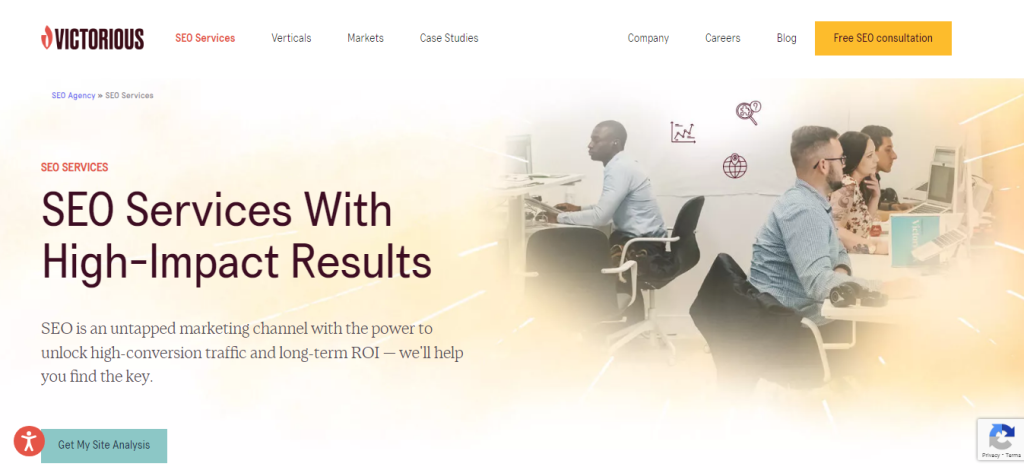
3. Victorious

Victorious is a boutique SEO company, that offers specialized and tailored SEO services, that can help you achieve your specific online goals. 

Equally important, they uses a data-driven and transparent approach, that can help you optimize your website and content for your target keywords and topics. 

They have a team of over 40 SEO specialists, who have won several awards and recognitions, such as the Best SEO Agency in the USA by Clutch. Victorious’s SEO pricing is custom, based on your needs and budget.

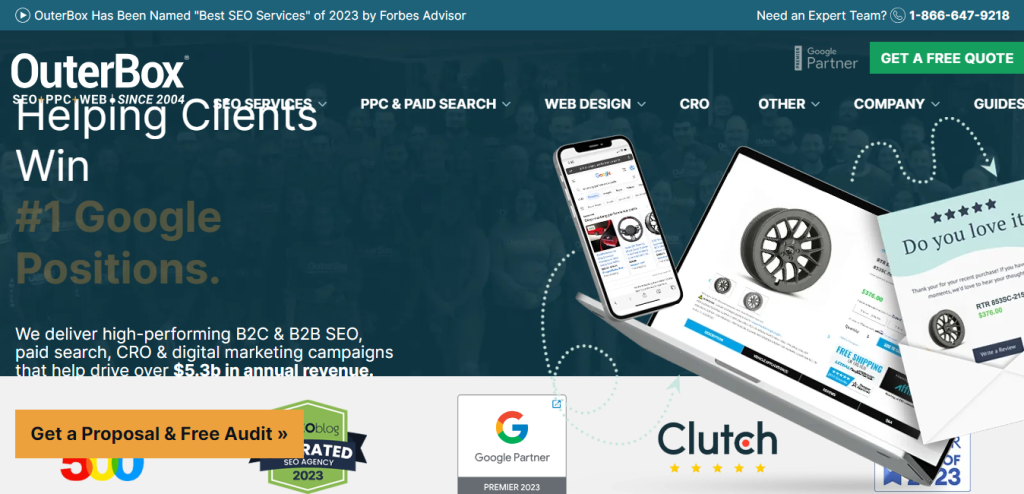
4. OuterBox

OuterBox is a SEO company, that focuses on e-commerce SEO, which is the process of optimizing your online store and products for search engines and users. 

OuterBox also helps you create and implement an effective SEO strategy, that can help you compete and succeed in your niche. OuterBox has a team of over 50 SEO experts, who have worked with clients from various e-commerce platforms, such as Shopify, Magento, and WooCommerce. OuterBox’s SEO pricing is custom, based on your needs and budget.

5. SEO Brand

SEO Brand is an SEO company, that focuses on brand building, which is the process of creating and enhancing your online identity and reputation. 

SEO Brand also helps you create and optimize your website and content for your target audience and search engines, by using various methods, such as keyword research, content creation, content optimization, technical SEO, and link building. 

They have a team of over 100 SEO professionals, who have worked with clients from various industries, such as fashion, travel, and finance. SEO Brand’s SEO pricing is custom, based on your needs and budget.

6. Funnel Boost Media

Funnel Boost Media is a SEO company, that focuses on local SEO, which is the process of optimizing your website and content for your local audience and search engines. 

Local SEO can help you increase your local visibility and traffic, by using various techniques, such as local keyword research, local content creation, local citation building, local map optimization, and local review management. 

Funnel Boost Media also helps you create and optimize your website and content for your target keywords and topics, by using various methods, such as keyword research, content creation, content optimization, technical SEO, and link building. 

Funnel Boost Media has a team of over 20 SEO experts, who have worked with clients from various local industries, such as law, dental, and plumbing. Funnel Boost Media’s SEO plans start at $1,500 per month.

7. HigherVisibility

seo company

HigherVisibility is a full-service SEO and digital marketing agency, that offers a wide range of SEO and online marketing services, that can help you improve your online presence and results. HigherVisibility can help you with various aspects of SEO, such as keyword research, content creation, content optimization, technical SEO, link building, analytics, and reporting. 

Furthermore, they can help you with other online marketing services. Such as pay-per-click (PPC) advertising, social media marketing, email marketing, and web design and development. Moreover, HigherVisibility’s SEO pricing is custom, based on your needs and budget.

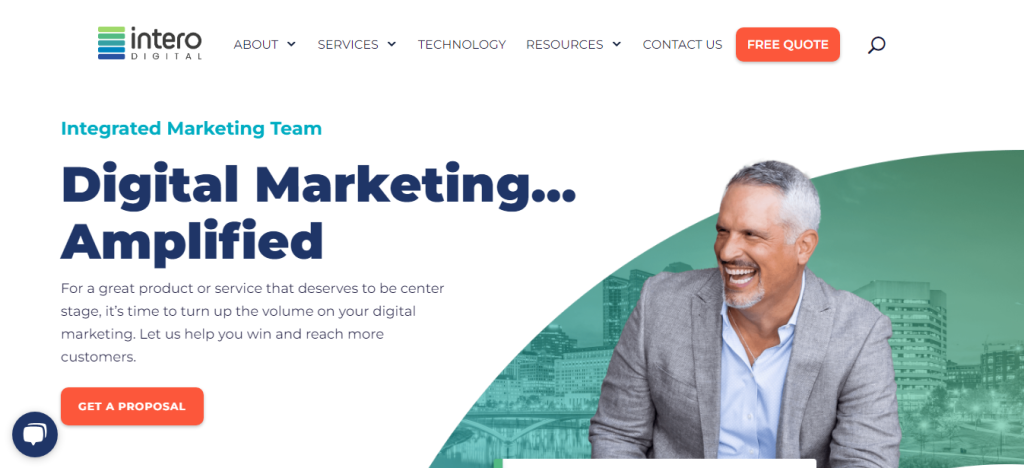
8. Intero Digital

Intero Digital is an SEO company, that focuses on large organizations and enterprises, that have complex and challenging online needs and goals. Intero Digital can help you create and implement a comprehensive and effective SEO strategy, that can help you improve your website’s ranking and visibility, drive more organic traffic, and generate more leads and sales. 

Intero Digital can also help you with other online services, such as web design and development, web hosting and maintenance, and web security and compliance. Intero Digital has a team of over 200 SEO and web experts, who have worked with clients from various industries, such as government, education, and finance. Intero Digital’s SEO pricing is custom, based on your needs and budget.

9. Incrementors

seo company

Incrementors is a SEO company, that focuses on customer service, which is the process of providing support and assistance to your online customers and clients. Incrementors can help you increase your customer satisfaction and loyalty, by using various techniques, such as live chat, phone support, email support, and social media support. 

Incrementors can also help you create and optimize your website and content for your target audience and search engines, by using various methods, such as keyword research, content creation, content optimization, technical SEO, and link building. 

Incrementors’s SEO plans start at $499 per month.

10. Fannit

Fannit is a SEO company, that focuses on SEO content writing, which is the process of creating high-quality and engaging content for your website and audience, based on your keywords and topics. 

Fannit can help you increase your website’s ranking and visibility, drive more organic traffic, and generate more leads and sales. 

Fannit’s SEO pricing is custom, based on your needs and budget.

Wrap-up

SEO is a vital and powerful way to improve your online presence and results, as it can help you rank high on search engines, attract and retain your audience, and increase your brand awareness and credibility. 

However, SEO is not a simple and easy task, as it requires a lot of knowledge, skills, and tools. That’s why hiring an SEO company can be a smart and cost-effective decision, as it can provide you with the best SEO solutions and services, that suit your needs and goals.

If you need professional help with your digital needs, we are here for you with our exceptional web design services and optimization services. Check out our home page for details. 

We are a team of web designers and SEO experts, who can help you create and optimize your website for your audience and search engines. We offer affordable and customized web design services and SEO solutions that can suit your needs and goals. 

Contact us today and get a free quote and consultation. We look forward to hearing from you.

How To Create a Stunning Business Infographic: 5 Easy Steps

A business infographic is a visual representation of data, information, or knowledge related to your business. Such as your products, services, processes, or results. A business infographic can help you communicate your message more effectively. It can help you attract and keep your audience’s attention. And increase your brand awareness and credibility. 

But, creating a business infographic can be challenging and time-consuming. Especially if you are not a professional designer. Or you have no experience with graphic design tools. 

That’s why we have prepared this guide for you, to help you create a stunning business infographic in 5 easy steps.

Step 1: Define Your Goal and Audience

Business Infographic

Firstly, creating a business infographic is to define your goal and audience. You should have a clear and specific idea of what you want to achieve and how you will measure your success. 

You should also know who your target audience is. Their needs, preferences, and expectations, and how you can provide solutions to them. By defining your audience, you can create a business infographic that is relevant to them.

Some examples of goals and audiences for a business infographic are:

  • Showcase your product’s features and benefits, and persuade your potential customers to buy it.
  • Explain your service’s process and results, and demonstrate your expertise and credibility to your clients.
  • Highlight your company’s achievements and milestones, and increase your brand awareness and trustworthiness to your stakeholders.
  • Compare your competitors’ strengths and weaknesses, and position yourself as a leader and innovator in your niche.
  • Educate your employees or partners about your company’s vision, mission, and values, and motivate them to work together and achieve your goals.

Step 2: Choose Your Data and Information

Secondly, creating a business infographic is to choose your data and information. You should select the data and information that are relevant to your audience. And that can support your message and argument. 

You should also make sure that your data and information are accurate and up-to-date. Also, ensure that you have the permission and source to use them. By choosing your data you can create a business infographic that is informative.

Some examples of data and information for a business infographic are:

  • Statistics, such as numbers, percentages, ratios, and trends, that can show your performance, growth, or impact.
  • Facts, such as dates, names, locations, and events, that can provide context, background, or evidence to your story.
  • Quotes, such as testimonials, reviews, or feedback, that can express opinions, emotions, or experiences related to your topic.
  • Tips, such as advice, recommendations, or best practices, that can offer guidance, solutions, or value to your audience.
  • Questions, such as challenges, problems, or dilemmas, that can spark curiosity, interest, or engagement from your audience.

Step 3: Choose Your Format and Layout

Thirdly, creating a business infographic is to choose your format and layout. You should choose the format and layout that are suitable for your data and information. Make sure that can convey your message and argument in a logical manner. 

You should also consider the size, shape, and orientation of your infographic. Keep in mind how it will fit and display on different devices and platforms. By choosing your format and layout, you can create a business infographic. An infographic that is coherent and attractive.

Some examples of formats and layouts for a business infographic are:

  • Timeline, which can show the chronological order, sequence, or progression of your data and information.
  • Process, which can show the steps, stages, or phases of your data and information.
  • Comparison, which can show the similarities, differences, or contrasts of your data and information.
  • List, which can show the categories, types, or examples of your data and information.
  • Chart, which can show the quantity, proportion, or relationship of your data and information.

Step 4: Choose Your Design and Style

Fourthly, creating a business infographic is to choose your design and style. You should choose a design that is compatible with your brand identity and voice. Ensure that the design can reflect your personality and values. 

You should also use design and style elements. Such as colors, fonts, icons, images, and shapes. These can enhance your data and information. Making them more appealing and memorable. 

Some examples of design and style elements for a business infographic are:

  • Colors. These can create contrast, harmony, or emphasis, and convey emotions, moods, or meanings.
  • Fonts. Typography has the power to create hierarchy, balance, or alignment. It can convey personality, style, or tone.
  • Icons. Tiny ones can represent, symbolize, or illustrate your data and information. Making them more visual and recognizable.
  • Images. These can explain your data and information, and make them more engaging.
  • Shapes. Unique shapes can create boundaries, spaces, or patterns, and convey direction, movement, or structure.

Step 5: Choose Your Tools and Resources

Lastly, creating a business infographic is to choose your tools and resources. You should choose the tools and resources that are easy and convenient to use. That can help you create and optimize your business infographic. 

You should also use the tools and resources that are affordable and accessible. That can provide you with quality and variety. By choosing your resources, you can create a professional business infographic.

Some examples of tools and resources for creating an infographic are:

  • Graphic design software, such as Adobe Illustrator, Photoshop, or InDesign. Such software can help you create and edit your business infographic. Providing you with advanced and customized features and options.
  • Online infographic makers, such as Canva, Piktochart, or Visme, can help you create and share your business infographic, and provide you with ready-made and easy-to-use templates, elements, and formats.
  • Data visualization tools, such as Google Charts, Tableau, or Infogram, can help you create and display your business infographic, and provide you with interactive and dynamic charts, graphs, and maps.
  • Stock image websites, such as Unsplash, Pixabay, or Pexels, can help you find and use high-quality and royalty-free images for your business infographic.
  • Icon websites, such as Flaticon, Iconfinder, or Noun Project, can help you find and use thousands of icons for your business infographic.

Wrapping up

A business infographic is a powerful and popular way to communicate your message, attract and retain your audience, and increase your brand awareness and credibility. 

To create a stunning business infographic, you should follow the steps of defining your goal and audience, choosing your data and information, choosing your format and layout, choosing your design and style, choosing your tools and resources, and using various techniques and elements to enhance your content and presentation.

If you need professional help with your web designing needs, you can contact us for amazing, affordable, and super-effective web design services. 

We are a team of experienced and qualified web designers and infographic creators who can help you create and optimize your business infographic for your audience and search engines. We offer affordable and customized web design services that can suit your needs and goals. Contact us today and get a free quote and consultation. We look forward to hearing from you.

Content Optimization: The Key to Successful Online Marketing

Content is king, as the saying goes. But not all content is equal. If you want to stand out from the crowd and attract your target audience. You need to optimize your content for both search engines and users. Content optimization is the process of improving the quality of your content. So that it can rank higher on search engines. Driving more traffic and generating more conversions. In this article, we will explain what content optimization is. Why it is important. And how you can do it effectively.

What is Content Optimization?

Content Optimization

Content optimization is the practice of enhancing your content. To make it more appealing and useful for your audience and search engines. It involves various aspects, such as:

Keyword Research

This is the process of finding and analyzing the best keywords for your content. Based on your niche, audience, and competitors. 

These are phrases that your audience uses to search for information. It could be something related to your content, your products, or your services.

You can increase the chances of your content getting seen by using the right keywords. More views equals more clicks by your potential customers.

Content Creation

This is the process of producing high-quality and engaging content for your audience. Based on your keywords and topics. 

Your content should be original, relevant, informative, and entertaining. It should provide value and solutions to your audience’s needs and problems. 

Your content should also follow the best practices of content writing. Such as using concise language, writing short paragraphs, and avoiding consecutive sentences. You should also try using more transition words. And ensure to cut hard-to-read or redundant words.

Content Formatting

This is the process of presenting your content in a way that makes it easy to read and for your audience. As well as search engines like Google, Yahoo, or Bing. 

Your content should have a clear and logical structure, with headings, subheadings, bullet points, lists, images, videos, and other visual elements. These elements can break up the text and improve its readability and attractiveness. 

Your content should also have a catchy and descriptive title. It should start with a compelling and concise introduction. And end with a brief and persuasive conclusion that summarizes your main points.

Content Optimization for SEO

This is the process of applying the best practices of SEO to your content. So that it can rank higher on search engines and drive more organic traffic to your website. 

SEO is the process of improving the quality and quantity of web traffic. By making your website more relevant for your target audience. Content optimization for SEO involves various techniques, such as:

  • Using your target keywords naturally throughout your content. Especially in your title, headings, introduction, conclusion, and meta tags.
  • Optimizing your content’s length, density, and frequency. According to your topic, audience, and purpose. Generally, longer and more comprehensive content tends to rank better than shorter and superficial content. As it can provide more value and information to your audience. Yet, you should also avoid stuffing your content with too many keywords or irrelevant information. As this can harm your content’s quality and readability. Which can lead to lower ranking and credibility.
  • Optimizing your content’s speed, security, and mobile-friendliness. These are some of the factors that affect your content’s performance and user experience. These factors also influence your ranking and traffic.
  • Optimizing your content’s links, both internal and external. These are some of the factors that affect your content’s relevance and authority. These factors also influence your ranking and traffic. You should make sure that your content has relevant and quality links. That can provide more value and information to your audience and search engines. You should also avoid and remove any broken or spammy links. Which you think can harm your content’s reputation and ranking.

Content Optimization for UX

This is the process of improving your content’s user experience (UX). Which is the impression and satisfaction that your audience has when interacting with your content. 

UX is one of the most important factors that affect your content’s success and results. It can influence your audience’s behavior and actions. Such as staying on your website, clicking on your links, or buying your products or services. Content optimization for UX involves various techniques, such as:

  • Understanding your audience’s needs, preferences, and expectations. And creating content that matches them. You should conduct thorough research and analysis of your audience. Such as their demographics, psychographics, pain points, goals, and motivations. And use this information to create content that can resonate with them.
  • Personalizing your content for your audience, and creating content that is relevant and tailored to their specific interests, needs, and situations. You should use various methods and tools. Such as segmentation, targeting, and customization, to create content that can appeal to different segments and types of your audience. And deliver the right message and offer to the right person at the right time.
  • Engaging your audience with your content, and creating content that is interactive and dynamic, can capture your audience’s attention and interest. It can also encourage them to take part and take action. You should use various elements and features. Such as quizzes, polls, surveys, games, videos, animations, and chatbots to create content that can stimulate and involve your audience, and elicit their feedback and response.

Why is Content Optimization Important?

Content optimization is important for various reasons, such as:

  • It can help you improve your website’s ranking and visibility on search engines. Which can increase your organic traffic and exposure to your target audience.
  • It can help you increase your website’s conversion rate and revenue. Which can improve your business performance and profitability.
  • It can help you enhance your website’s reputation and authority. Which can improve your brand awareness and trustworthiness. By optimizing your content for your audience you can prove your expertise. Then you can establish yourself as a leader and influencer in your niche.
  • It can help you create a loyal and engaged audience, which can improve your customer retention and satisfaction. By optimizing your content for your audience and search engines, you can provide a positive and memorable experience to your audience. Building a strong and lasting relationship with them.

How to do Content Optimization in an Effective Way?

Content optimization is not a one-time task. But an ongoing process that requires constant monitoring and improvement. To do content optimization in an effective way, you should follow these steps:

Define Your Goals and Objectives

Before optimizing your content, you should have a clear and specific idea of what you want to achieve. And also how you will measure your success. 

You should set SMART goals. Which are specific, measurable, achievable, relevant, and time-bound. And align them with your business and marketing strategy. 

For example, your goal could be to increase your website’s traffic by 20% in the next three months. Or to generate 50 new leads per month from your content.

Know Your Audience

The next step is to understand your target audience. Their needs, preferences, and expectations. Analyze how you can provide value and solutions to them. 

You should conduct thorough research and analysis of your audience. Using various methods and tools. Such as surveys, interviews, focus groups, analytics, and personas. 

You should also segment your audience into different groups and types. Based on their demographics, psychographics, behavior, and situation. And create content that is relevant and tailored to each segment.

Choose Your Keywords

The next step is to find and analyze the best keywords for your content. Based on your niche, audience, and competitors. You should use tools and techniques, such as keyword research tools, keyword planners, keyword generators, and keyword analyzers, to discover new keyword opportunities, identify keyword difficulty and search volume, and optimize your content and meta tags for your target keywords. 

You should also use a mix of short-tail and long-tail keywords. As well as semantic and related keywords, to increase your content’s relevance.

Create Your Content

The next step is to produce high-quality and engaging content for your audience. Based on your keywords and topics. You should use various formats and types of content, such as blog posts, articles, ebooks, white papers, case studies, infographics, videos, podcasts, and webinars, to provide more value and information to your audience. And cater to their different preferences and needs. 

You should also follow the best practices of content writing.

Format Your Content

The next step is to organize and present your content in a way that makes it easy to read and understand for your audience and search engines. 

You should use various elements and features, such as headings, subheadings, bullet points, lists, images, videos, and other visual elements, to break up the text and improve its readability and attractiveness. 

You should also use a catchy and descriptive title, a compelling and concise introduction, and a brief and persuasive conclusion, that summarize your main points and call your audience to action.

Optimize Your Content for SEO

The next step is to apply the best practices of SEO to your content so that it can rank higher on search engines and drive more organic traffic to your website. You should use your target keywords strategically and naturally throughout your content, especially in your title, headings, introduction, conclusion, and meta tags. Also, optimize your content’s length, density, and frequency, according to your topic, audience, and purpose.

You should also optimize your content’s speed, security, and mobile-friendliness, as these are some of the factors that affect your content’s performance and user experience, and influence your ranking and traffic. You should also optimize your content’s links, both internal and external, as these are some of the factors that affect your content’s relevance and authority, and influence your ranking and traffic.

Optimize Your Content for UX

The final step is to improve your content’s user experience, which is the overall impression and satisfaction that your audience has when interacting with your content. 

You should understand your audience’s needs, preferences, and expectations, and create content that matches them. Also, personalize your content for your audience, and create content that is relevant and tailored to their specific interests, needs, and situations. 

You should also engage your audience with your content, and create content that is interactive and dynamic, that can capture and retain your audience’s attention and interest, and encourage them to participate and take action.

Final Analysis

Content optimization is the key to successful online marketing, as it can help you improve your website’s ranking and visibility on search engines, increase your website’s conversion rate and revenue, enhance your website’s reputation and authority, and create a loyal and engaged audience. 

To do content optimization effectively, you should follow the steps of keyword research, content creation, content formatting, content optimization for SEO, and content optimization for UX, and use various tools and techniques to enhance your content’s quality and relevance.

If you need professional help with your content optimization or web designing, you can contact us at My Content Quest. 

We are a team of experienced and qualified web designers and content optimizers who can help you create and optimize your content for your audience and search engines. 

We offer affordable and customized web design services and content optimization solutions that can suit your needs and goals. 

Contact us today and get a free quote and consultation. We look forward to hearing from you.

How To Choose The Best SEO Platform For Your Business

SEO platform is a software that helps you manage your search engine optimization (SEO) strategy and performance. It can help you with various aspects of SEO. Such as keyword research, content creation, technical SEO, on-page SEO, off-page SEO, analytics, and reporting.

It can help you save time, money, and hassle, by automating or simplifying some of the tasks involved in SEO. The platform can also help you test your SEO performance. By providing you with various tools and metrics. Such as impressions, clicks, rankings, bounce rate, dwell time, conversion rate, and more.

But how can you choose the best one for your business? There are many platforms available in the market, each with its own features and benefits. But, you can make your decision easier by considering some of the following factors:

Your Budget

You need to determine how much you can afford to spend on an SEO platform. Compare the prices and the value of different options. You need to look for a platform that offers the best quality and functionality for your money. Also, the one that fits your budget and your expectations.

Your Goals

You need to define your goals and your desired outcomes by using an SEO platform. And look for the options that can help you achieve them. You need to look for an SEO platform that can help you improve your search engine rankings.

Your Needs

You need to assess your needs and your challenges from your current SEO situation and look for the options that can help you solve them. You need to look for the platforms that can help you optimize your website and content for search engines and users, and provide you with the suggestions and recommendations that you need to improve your SEO.

Your Preferences

You need to consider your preferences and your style from using such a platform and look for options that can match them. You need to look for an SEO platform that can offer you the features and functions that you prefer, such as web-based or desktop-based, simple or complex, automated or manual, and more.

Your Reviews

You need to research and read the reviews and testimonials from other users who have used the platform that you are interested in and look for the options that have the best reputation and feedback. You need to look for the platform that has the highest ratings, the most positive comments, and the most satisfied customers.

Some Examples of SEO Platforms

To give you some ideas, here are some examples that you can consider for your business:

Moz

Moz is a popular and trusted search engine platform that offers a comprehensive and easy-to-use suite of SEO tools, such as Moz Pro, Moz Local, Moz Content, and Moz Bar.

Moz can help you with keyword research, content creation, technical SEO, on-page SEO, off-page SEO, analytics, and reporting. Moz also provides you with the Moz Academy, the Moz Blog, and the Moz Community, where you can learn and interact with other SEO experts and enthusiasts.

SEMrush

SEMrush is a powerful and versatile platform that offers a wide range of SEO tools, such as SEMrush SEO Toolkit, SEMrush Content Marketing Toolkit, SEMrush Advertising Toolkit, and SEMrush Social Media Toolkit.

SEMrush can help you with keyword research, content creation, technical SEO, on-page SEO, off-page SEO, analytics, and reporting.

SEMrush also provides you with the SEMrush Academy, the SEMrush Blog, and the SEMrush Webinars, where you can learn and stay updated with the latest SEO trends and best practices.

Ahrefs

Ahrefs is a comprehensive and advanced platform that offers a robust and reliable suite of SEO tools, such as Ahrefs Site Explorer, Ahrefs Keywords Explorer, Ahrefs Site Audit, and Ahrefs Rank Tracker.

Ahrefs can help you with keyword research, content creation, technical SEO, on-page SEO, off-page SEO, analytics, and reporting. Ahrefs also provides you with the Ahrefs Academy, the Ahrefs Blog, and the Ahrefs YouTube Channel, where you can learn and get inspired by SEO experts and case studies.

How to Optimize Your SEO Platform for Better Results?

SEO Platform

Using an SEO platform can help you improve your SEO performance, but you also need to optimize it for better results. Optimizing your search engine platform means making the most out of the features and functions that the platform offers, and using them in the best possible way.

Optimizing your SEO platform can help you save more time, money, and hassle, and achieve more online visibility, traffic, conversions, and sales. Here are some tips on how to optimize your platform for better results:

Customize Your SEO Platform

You need to customize it according to your specific needs and goals and avoid using the default or generic settings.

You need to adjust the parameters and options that the SEO platform provides, such as the keywords, the competitors, the locations, the devices, the languages, and more, to match your target audience and your niche.

You also need to integrate it with other tools and platforms that you use, such as your website, your analytics, your social media, and more, to create a seamless and holistic SEO strategy.

Update Your SEO Platform

You need to update your SEO platform regularly, to keep up with the latest changes and trends in SEO and online marketing.

You need to check for the new features and functions that the SEO platform offers and learn how to use them effectively. You also need to update the data and the information that the SEO platform collects and analyzes and make sure that they are accurate and reliable. You also need to update your SEO strategy and tactics, based on the insights and recommendations that the SEO platform provides, and make sure that they are relevant and effective.

Review Your SEO Platform

You need to review it periodically, to evaluate its performance and value.

You need to measure the results and the outcomes that help you achieve and compare them with your goals and KPIs.

You also need to measure the ROI and the cost-effectiveness of the platform and see if it is worth your investment. You also need to get feedback and suggestions from your stakeholders, such as your clients, your boss, your team, or your partners, and see if they are satisfied and happy with the platform.

Summary

SEO platform is a useful and powerful tool that can help you manage and improve your SEO strategy and performance. SEO platform can help you optimize your website and content for search engines and users, and provide you with the suggestions and recommendations that you need to improve your SEO.

However, if you need help with your web design, you can contact us for exceptional web design services. We can help you create a stunning and SEO-friendly website that will attract and convert your audience. Contact us today and get a free quote!

3 Tips For Better Search Engine Placement For Your Website

Better search engine placement is the goal of every website owner. That wants to increase their online visibility, traffic, conversions, and sales. Better placement means ranking higher on the search engine results pages (SERPs). 

Good search engine rankings can help you reach more potential customers. But how can you achieve better placement for your website?

In this article, we will share some tips and strategies that can help you improve your placement. And boost your online performance.

#1. Conduct Keyword Research

Better Search Engine Placement

Keyword research is the process of finding and analyzing the words. Phrases that your target audience uses to search for your products or services online.

Research can help you identify the most relevant keywords for your website. And optimize your content and website for them. Keyword research can also help you discover new opportunities and niches. Helping you avoid wasting time and money on keywords that are too competitive.

To conduct keyword research, you can use various tools. Such as Google Keyword Planner, Moz Keyword Explorer, or SEMrush Keyword Magic Tool.

These tools can help you generate keyword ideas, analyze keyword metrics, such as search volume, competition, difficulty, and cost-per-click (CPC), and find keyword variations, such as synonyms, related terms, and long-tail keywords.

#2. Create High-Quality and Relevant Content

Content is the core of your website. Also, the main factor that determines your search engine placement.

Content is the information and ideas that you provide to your audience, such as text, images, videos, audio, or interactive elements. Content can help you attract and engage your audience, provide value and benefits to them, and persuade and influence them to take action.

To create high-quality and relevant content, you need to:

Follow the E-A-T Principle

E-A-T stands for expertise, authority, and trustworthiness. These are the criteria that search engines use to test the quality of your content. You need to prove your expertise, authority, and trustworthiness on your topic. By providing accurate, reliable, and useful information. Also by showcasing your credentials, awards, testimonials, and reviews.

Follow the Search Intent

Search intent is the goal or the purpose of the user behind their search query. You need to match the search intent of your audience. By providing content that satisfies their needs and expectations.

For example, if the search intent is informational, you need to provide educational content. Such as articles, blogs, guides, or tutorials. If the search intent is transactional, you need to provide persuasive content. Such as product pages, landing pages, or sales pages.

Follow the SEO Best Practices

SEO best practices are the guidelines and techniques that can help you optimize your content for search engines and users. You need to follow the SEO best practices. Such as using keywords strategically, writing catchy and descriptive titles and meta descriptions, using headings and subheadings, adding images and multimedia, using internal and external links, and more.

#3. Improve Your Technical SEO

Technical SEO is the process of ensuring that your website is fast, secure, mobile-friendly, and easy to crawl and index by search engines. Technical SEO can help you improve your user experience and satisfaction. It can also help avoid any technical issues that might harm your search engine placement.

To improve your technical SEO, you need to:

Optimize Your Site Speed

Site speed is the time that it takes for your website to load and display on the user’s device. Site speed is an important ranking factor. As it affects your user experience and satisfaction and your bounce rate and dwell time.

You need to optimize your site speed by using tools such as Google PageSpeed Insights, GTmetrix, or Pingdom. And by following their suggestions, such as compressing your images, minifying your code, enabling caching, and using a content delivery network (CDN).

Optimize Your Site Security

Site security is the level of protection that your website has against malicious attacks and threats, such as hacking, phishing, or malware.

Site security is an important ranking factor, as it affects your user trust and confidence, and your site reputation and authority. You need to optimize your site security, by using tools such as Google Search Console, Sucuri, or Wordfence, and by following their suggestions, such as using HTTPS, updating your software, and scanning your site regularly.

Optimize Your Site Mobile-Friendliness

Site mobile-friendliness is the degree to which your website is compatible and responsive to different devices and screen sizes, such as smartphones, tablets, or laptops.

Site mobile-friendliness is an important ranking factor, as it affects your user accessibility and convenience, and your site traffic and conversions.

You need to optimize your site’s mobile-friendliness, by using tools such as Google Mobile-Friendly Test, Google Test My Site, or Responsive Design Checker, and by following their suggestions, such as using a responsive design, avoiding pop-ups, and using legible fonts and buttons.

Final Analysis

Better search engine placement is the goal of every website owner who wants to increase their online visibility, traffic, conversions, and sales.

Search rankings can be enhanced by following some tips and strategies, such as conducting keyword research, creating high-quality and relevant content, and improving your technical SEO.

However, if you need help with your web design, you can contact us. We are a professional and experienced web design services provider company that can help you create a stunning and SEO-friendly website that will attract and convert your audience. Contact us today and get a free quote!

Using Product Marketing Templates To Launch Your Product

Product marketing is the process of planning, creating, and delivering the right message to the right audience at the right time, to promote and sell your product. Product marketing is essential for launching and growing your product, as it helps you to:

  • Understand your market, your customers, and your competitors
  • Define your value proposition, your positioning, and your differentiation
  • Develop your product strategy, your go-to-market strategy, and your launch plan
  • Create your product messaging, your branding, and your content
  • Distribute your product, your marketing campaigns, and your channels
  • Measure your product performance, your marketing results, and your customer feedback

However, product marketing is not a simple or easy task. It requires a lot of skills, knowledge, and experience to create and execute a successful product marketing strategy. That’s why you need to use product marketing templates.

Product marketing templates are ready-made documents, tools, and frameworks that help you plan, create, and execute your product marketing activities. These templates save you time, money, and effort, and help you avoid common mistakes and pitfalls. 

They also help you to organize your product marketing information, communicate your product marketing vision, and collaborate with your product marketing team.

But how do you use a marketing template to launch and grow your product? Here are some tips and best practices that you can follow to launch and grow your product.

Choose the Right Product Marketing Templates for Your Product

Product Marketing Templates

The first step is to choose the right product marketing templates for your product. You need to select the one that matches your product type, your product stage, and your product goals. You also need to consider your budget, resources, and timeline for your product marketing activities.

Some of the common ones that you can use for your product are:

Product Marketing Plan Template

A product marketing plan template helps you to outline your product marketing strategy, your product marketing objectives, and your product marketing tactics. 

A product marketing plan template helps you to align your product marketing activities with your product vision and business goals.

Product Launch Checklist Template

A product launch checklist template helps you to prepare and execute your product launch plan, your product launch activities, and your product launch timeline. 

A product launch checklist template helps you to ensure that you have covered all the essential steps and tasks for your product launch.

Product Messaging Template

A product messaging template helps you to create and refine your product messaging, your product value proposition, and your product positioning. 

A product messaging template helps you to communicate your product benefits and features to your target audience and persuade them to buy your product.

Product Content Calendar Template

A product content calendar template helps you to plan, create, and schedule your product content, your product marketing campaigns, and your product marketing channels. 

A product content calendar template helps you to deliver your product message to your audience at the right time and place.

Product Marketing Dashboard Template

A product marketing dashboard template helps you to track, measure, and analyze your product performance, your product marketing results, and your product marketing metrics. 

A product marketing dashboard template helps you to evaluate your product marketing effectiveness and impact and optimize your product marketing strategy.

Customize Your Product Marketing Templates to Fit Your Product

The second step is to customize your templates to fit your product. You need to adapt and modify your templates to suit your product needs, your product characteristics, and your product audience. You also need to update and revise your marketing templates as your product evolves and grows.

Some of the ways that you can customize them are:

  • Add your product name, your product logo, and your product branding to your templates.
  • Incorporate your product information, your product data, and your product research.
  • Add your product goals, your product metrics, and your product targets.
  • Adjoin your product messaging, your product content, and your product visuals.
  • Attach your product feedback, your product insights, and your product recommendations.

Use Your Product Marketing Templates to Execute Your Product Marketing Strategy

The third and final step is to use your product marketing templates to execute your product marketing strategy. You need to use your templates as a guide and a reference for your product marketing activities.

You also need to use your product marketing templates as a tool and a resource for your product marketing team.

Some of the ways that you can use your marketing templates are:

  • Use your product marketing plan template to plan and execute your product marketing strategy, your product marketing objectives, and your product marketing tactics.
  • Utilize your product launch checklist template to prepare and execute your product launch plan, your product launch activities, and your product launch timeline.
  • Use your product messaging template to create and refine your product messaging, your product value proposition, and your product positioning.
  • Put to use your product content calendar template to plan, create, and schedule your product content, your product marketing campaigns, and your product marketing channels.
  • Emply your product marketing dashboard template to track, measure, and analyze your product performance, your product marketing results, and your product marketing metrics.

Final Words

Using product marketing templates is a smart and effective way to launch and grow your product. By using them, you can save time, money, and effort, and avoid common mistakes and pitfalls. 

You can also organize your product marketing information, communicate your product marketing vision, and collaborate with your product marketing team.

If you need professional help with creating or using product marketing templates, you can always contact us. A plus point we also offer exceptional yet affordable web design services. We are a team of experienced and skilled web designers with vast experience in this field.

Whether you need a new website, a redesign, or a product update, we can help you with your product marketing needs. Contact us today and let the magic begin!

Search Engine Placement Software: Being At The Best

Search engine placement software is a type of software that helps you optimize your website for search engines. Such as Google or Bing. Search engine placement software can help you improve your search engine rankings. Which can lead to more online visibility, traffic, conversions, and sales.

In this article, we will explain what search engine placement software is. Also how it works, and how you can use it for your benefit.

What is Search Engine Placement Software?

Search Engine Placement Software

Search engine placement software automates some of the tasks involved in SEO. Which is the process of improving your website and content to rank higher on search engines. Search engine placement software can help you with various aspects of SEO, such as:

  • Keyword research: finding the words and phrases that your target audience uses to search for your products or services online.
  • Content creation: producing high-quality and relevant content that answers the queries of your audience and provides value to them.
  • Technical SEO: ensuring that your website is fast, secure, mobile-friendly, and easy to crawl and index by search engines.
  • On-page SEO: optimizing the elements of your web pages, such as titles, headings, meta descriptions, URLs, images, and internal links, to match the intent and expectations of your audience and search engines.
  • Off-page SEO: building the authority and reputation of your website by earning links, mentions, reviews, and social media shares from other reputable websites and influencers in your niche.

The software can help you save time, money, and hassle, by making your SEO process easier. This kind of software can also help you test and measure your SEO performance.

By providing you with various tools and metrics, such as impressions, clicks, rankings, bounce rate, dwell time, conversion rate, and more.

How Does Search Engine Placement Software Work?

Search engine placement software works by crawling and analyzing your website and content. Then provides you with suggestions and recommendations on how to improve your SEO.

Furthermore, the software uses various algorithms to optimize your website for search engines. It also uses various databases to collect data from different online platforms.

Moreover, search engine placement software can be either web-based or desktop-based. Depending on the type and the features of the software. You can access web-based software through a web browser. It does not need any installation or download.

But, you have to install desktop-based software to run on your computer. It may also need more resources and maintenance.

How to use Search Engine Placement Software?

To use search engine placement software, you need to:

Choose the Right Search Engine Placement Software

Firstly, you need to select the software that suits your needs and goals. Furthermore, it should offer the features and functions that you need. You need to compare the price, quality, reliability, and support of different software. Also, don’t forget to read the reviews and testimonials from other users.

Follow the Best Practices and Guidelines of Search Engines

Secondly, you need to follow the best practices and guidelines of search engines. Such as Google or Bing, and avoid any tactics or techniques that might harm your SEO. Such as keyword stuffing, cloaking, duplicate content, or spamming.

Moreover, you need to provide a positive user experience and satisfaction for your audience. Avoid any penalties or sanctions from search engines.

Test and Experiment With Different Strategies and Tactics

You need to test and experiment with different strategies and tactics. That way you’ll see what works and what does not for your website and content.

You need to track and measure your SEO performance. Using the tools and metrics that the search engine placement software provides. And make adjustments and optimizations as needed.

How to Choose the Best Search Engine Placement Software?

Choosing the best search engine placement software for your business can be a challenging task. Because there are many options available in the market. Each with its own features and benefits.

Yet, you can make your decision easier by considering some of the following factors:

Your Budget

You need to determine how much you can afford to spend on search engine placement software. Compare the prices and the value of different options. You need to look for the search engine placement software that offers the best quality for your money. And also that fits your budget and your expectations.

Your Goals

You need to define your goals and your desired outcomes from using the software. And look for the options that can help you achieve them. You need to look for a search engine placement software that can help you improve your search engine rankings, increase your online visibility, traffic, conversions, and sales, and provide you with the tools and metrics that you need to measure your success.

Your Needs

you need to assess your needs and your challenges from your current SEO situation and look for the options that can help you solve them. You need to look for search engine placement software that can help you optimize your website and content for search engines and users, and provide you with the suggestions and recommendations that you need to improve your SEO.

Your Preferences

You need to consider your preferences and your style by using search engine placement software and looking for options that can match them. You need to look for the search engine placement software that can offer you the features and functions that you prefer, such as web-based or desktop-based, simple or complex, automated or manual, and more.

Your Reviews

You need to research and read the reviews and testimonials from other users who have used the search engine placement software that you are interested in and look for the options that have the best reputation and feedback. You need to look for the search engine placement software that has the highest ratings, the most positive comments, and the most satisfied customers.

Final Words

Search engine placement software is a useful and powerful tool that can help you improve your search engine rankings, and increase your online visibility, traffic, conversions, and sales.

Search engine placement software can help you optimize your website and content for search engines and users, and provide you with suggestions and recommendations on how to improve your SEO.

However, if you need help with your web design, you can contact us. We offer highly affordable and effective web design services that can help you create a stunning and SEO-friendly website that will attract and convert your audience. Contact us today and get a free quote!

How to Start And Grow Your SEO Marketing Business

An SEO marketing business is a type of business that provides search engine optimization (SEO) services to other businesses. SEO is the process of improving the website. As well as the content of a business. So, it can rank higher on search engines like Google or Bing. Also to attract more organic traffic, conversions, and sales.

SEO marketing can help other businesses increase their online visibility. By using various strategies and techniques, such as keyword research, content creation, technical SEO, on-page SEO, off-page SEO, analytics, and reporting.

It is a lucrative and growing business. As more businesses realize the importance of SEO for their online success.

According to a report by Statista. The global SEO market size was estimated at 79.27 billion U.S. dollars in 2020 and is expected to grow to 83.17 billion U.S. dollars in 2021.

But, it is also a challenging and competitive business. As it requires a lot of skills, knowledge, experience, and resources. And as it faces a lot of changes and trends in the SEO and online marketing industry.

If you want to start and grow your marketing business, you need to follow some steps and tips, such as:

Step 1: Define Your Niche and Target Market

SEO Marketing Business

The first step to starting and growing your business is to define your niche and target market. Your niche is the specific area or segment of the SEO and online marketing industry. That you want to focus on and specialize in. Your target market is the specific group of businesses that you want to provide your SEO services to.

Defining your niche and target market can help you:

Stand out From the Crowd

By focusing on a niche, you can differentiate yourself from other businesses like you. And you can create a unique and memorable brand identity and value proposition.

Attract and Keep Your Ideal Clients

You can attract and keep your ideal clients, interested in your SEO services. And who are willing to pay for your SEO services.

Build Your Expertise and Authority

By focusing on a niche and a target market, you can build your expertise on your topic. You can showcase your skills, knowledge, experience, and results. You can also earn the trust and loyalty of your clients and your industry.

To define your niche and target market, you need to:

Conduct Market Research

You need to conduct market research, to identify and analyze the needs, problems, preferences, and expectations of your potential clients. And to identify, threats, strengths, and weaknesses of your competitors.

Choose Your Niche and Target Market

You need to choose your niche and target market based on your market research. You need to choose a niche and a target market that are profitable, scalable, and sustainable. And the one that matches your vision and mission.

Some examples of niches and target markets for SEO marketing business are:

Local SEO

Local SEO is the process of optimizing the website and content of a business for local search queries. Such as “pizza near me” or “dentist in New York”. Local SEO can help local businesses to rank higher on local search results. 

Local SEO can involve various strategies and techniques. Such as optimizing the Google Business profile. Creating and managing local citations and reviews, and using local keywords and content.

E-commerce SEO

E-commerce SEO is the process of optimizing the website. In other words, the content of an online store for e-commerce search queries. Such as “buy shoes online” or “best headphones for gaming”.

E-commerce SEO can help online retailers. Such as Amazon, Shopify, or eBay, to rank higher on e-commerce search results. It can also help attract more online shoppers and sales.

It can involve various strategies and techniques. Such as optimizing the product pages, categories, and descriptions, creating and managing product reviews and ratings, and using product keywords and content.

B2B SEO

B2B SEO is the process of optimizing the website and content of a business that sells products or services to other businesses. For B2B search queries, such as “best CRM software” or “digital marketing agency”.

B2B SEO can help B2B businesses, such as software, consulting, or manufacturing, to rank higher on B2B search results, and to attract more B2B leads and clients. B2B SEO can involve various strategies and techniques. Such as optimizing the landing pages, case studies, and testimonials, B2B content marketing, and using B2B keywords and content.

Step 2: Create Your Business Plan and Strategy

The second step to starting and growing your SEO marketing business is to create your business plan and strategy. Your business plan and strategy are the documents that outline the details and the direction of your business. Such as your vision, mission, goals, objectives, strategies, tactics, actions, budget, and timeline.

Creating your business plan and strategy can help you:

Organize and Structure Your SEO Marketing Business

By creating your business plan and strategy, you can organize and structure your business. You can define the roles, responsibilities, and expectations of yourself and your team, and you can establish the policies, procedures, and standards of your marketing business.

Manage and Monitor Your Business

By creating your business plan and strategy, you can manage and monitor your business. You can track and measure your progress and performance. You can also evaluate your results and outcomes.

Communicate and Present

By creating your business plan and strategy, you can communicate and present your SEO marketing business. You can pitch and persuade your potential clients, investors, partners, or employees, showcase your value and benefits. Which can eventually help in earn their trust and support.

To create your business plan and strategy, you need to:

Conduct a SWOT Analysis

You need to conduct a SWOT analysis, to identify and analyze the strengths, weaknesses, opportunities, and threats of your marketing business. Also to determine your competitive advantage and your unique selling proposition.

Define Your Vision, Mission, Goals, and Objectives

You need to define your vision, mission, goals, and objectives, state the purpose, the direction, the desired outcomes, and the specific and measurable targets of your SEO marketing business, and align them with your niche and target market.

Develop Your Strategies, Tactics, and Actions

You need to develop your strategies, tactics, and actions, to plan and execute the steps and the methods that you will use to achieve your goals and objectives and to overcome your challenges and problems.

You need to consider various aspects of your business, such as your services, your pricing, your marketing, your sales, your operations, your finances, and your resources.

Set Your Budget and Timeline

You need to set your budget and timeline, estimate and allocate the amount of money and time that you will need and spend, and monitor and control your expenses and revenues, and your schedule and deadlines.

Step 3: Build Your Website and Portfolio

Your website and portfolio are the online platforms that represent and showcase your business, and that serves as your online storefront and resume.

Building your website and portfolio can help you:

Promote and Market

You can reach and attract more potential clients, and you can generate more leads and sales. You can use various online marketing channels, such as SEO, social media, email, or blogging, to drive more traffic and conversions to your website and portfolio.

Demonstrate and Prove Your SEO Skills

By building your website and portfolio, you can demonstrate and prove your SEO skills and results, and you can show your potential clients what you can do and what you have done for your business and your previous clients. You can use various elements, such as testimonials, reviews, case studies, or screenshots, to display your SEO achievements and success stories.

Educate and Inform Your Clients

By building your website and portfolio, you can educate and inform your potential clients, and you can provide them with valuable and useful information and insights about SEO and online marketing, and how they can benefit from your SEO services. You can use various elements, such as blogs, guides, videos, or webinars, to deliver your SEO knowledge and expertise.

To build your website and portfolio, you need to:

Choose Your Domain Name and Hosting

You need to choose your domain name and hosting, register and secure your online identity and address, and store and display your website and portfolio online. You need to choose a domain name and hosting that are relevant, memorable, and professional, and that reflect your SEO marketing business and your niche and target market.

Design and Develop Your Website and Portfolio

You need to design and develop your website and portfolio, to create and customize the layout, appearance, functionality, and content of your website and portfolio. You need to design and develop your website and portfolio that is user-friendly, SEO-friendly, mobile-friendly, fast-loading, and that matches your brand identity and value proposition.

Optimize and Update Your Website and Portfolio

You need to optimize and update your website and portfolio, to improve and maintain the performance, quality, and the relevance of your website and portfolio, to improve and maintain the performance, quality, and relevance of your website and portfolio.

You need to optimize and update your website and portfolio, by using various tools and techniques, such as SEO platform, Google Analytics, Google Search Console, or WordPress, and by following their suggestions and recommendations, such as fixing errors, adding new features, or creating new content.

Step 4: Promote and Grow Your SEO Marketing Business

Promoting and growing your marketing business means increasing your brand awareness, reputation, and authority, and expanding your client base, revenue, and profit.

Promoting and growing your business can help you:

Achieve Your Goals and Objectives

You can measure your success and outcomes, and you can celebrate your achievements and rewards.

Improve Your Skills and Knowledge

You can improve your skills and knowledge, you can learn new things gain new experiences, and stay updated and relevant with the latest SEO and online marketing trends and best practices.

Explore new Opportunities and Challenges

You can explore new opportunities and challenges, you can discover new niches and markets, you can face new problems and solutions, and you can grow and evolve as an SEO marketer and as a business owner.

To promote and grow your business, you need to:

Network and Build Relationships

You need to network and build relationships, connect and interact with other SEO marketers, influencers, experts, and enthusiasts, and exchange ideas, insights, feedback, and referrals. You can network and build relationships, by using various online and offline platforms, such as social media, forums, blogs, podcasts, webinars, events, or conferences.

Market and Advertise

You need to market and advertise your SEO marketing business, to reach and attract more potential clients, and generate more leads and sales. You can market and advertise it by using various online and offline channels, such as SEO, social media, email, blogging, video, or word-of-mouth.

Deliver and Exceed Your SEO Services

You need to deliver and exceed your SEO services, to provide your clients with the best SEO results and value, and satisfy and delight them. You can deliver and exceed your SEO services, by using various tools and techniques, such as SEO platform, Google Analytics, Google Search Console, or WordPress, and by following their suggestions and recommendations, such as optimizing, updating, or reporting your SEO performance.

Final Analysis

SEO marketing business is a lucrative and growing business, that can help you turn your passion and skills for SEO and online marketing into a profitable and rewarding career.

SEO marketing can be started and grown by following some steps and tips, such as defining your niche and target market, creating your business plan and strategy, building your website and portfolio, and promoting and growing your business. However, if you need help with your web design, you can contact us right now!

We are a professional and experienced web design services provider that can help you create a stunning and SEO-friendly website that will attract and convert your audience. Contact us today and get a free quote!

Content Marketing Expert: Why You Desperately Need One

Content marketing is like a secret language that connects your brand with the world. And in the vast landscape of digital communication, having a content marketing expert by your side is like having a magical key to unlock doors you didn’t even know existed.

What Makes a Content Marketing Expert?

Content Marketing Expert

So, what exactly is a content marketing expert? Well, think of them as the maestros of the digital orchestra. They are the wizards who sprinkle creativity into words, making your brand’s story not just heard but felt. These experts navigate the digital realm with finesse, turning your ideas into captivating narratives that resonate with your audience.

Why You Need a Content Marketing Expert

In the busy online world, it’s hard to get noticed. But here’s where a content marketing expert comes in like a superhero. They know how to tell stories and make content that grabs people’s attention. In a place where everyone is talking loud, they help your brand talk even louder.

These experts can help you in many ways, below are a few:

  • Strategic Storytelling: Content marketing experts excel in telling compelling stories that resonate with your audience, creating a strong emotional connection to your brand.
  • Attention-Grabbing Content: They have the skills to craft content that stands out in the crowded digital space, capturing the attention of potential customers and keeping them engaged.
  • Brand Visibility: Content writing experts understand how to optimize content for search engines, improving your brand’s visibility and ensuring it reaches the right audience.
  • Building Trust and Loyalty: Through authentic and valuable content, these experts help build trust with your audience, fostering loyalty that goes beyond a one-time transaction.

Crafting a Digital Symphony

A content marketing expert orchestrates your online presence. From blog posts that dance with your audience to social media captions that sing your brand’s tune, they create a harmonious symphony that leaves a lasting impression. Every word is a note, every post a melody, and your brand becomes a memorable song in the minds of your audience.

The ABCs of Content Marketing Mastery

Content marketing, a dynamic and powerful force in the digital realm, transcends mere wordcraft. It’s a nuanced art that involves delving into the intricate facets of understanding your audience, skillfully painting vivid narratives, and extending a heartfelt invitation for them to dance with the essence of your brand. 

To truly excel in content marketing is to grasp the fundamental ABCs – those building blocks that go beyond the surface, forming the bedrock of a connection that transcends a simple transaction. 

A content marketing expert effortlessly navigates this alphabet, turning each element into a strategic note in the symphony of brand storytelling.

Navigating the SEO Waters

Now, let’s talk about the not-so-secret weapon in a content marketing expert’s arsenal – SEO. Search engines are like the gatekeepers of the digital kingdom, and these experts know the spells to get past them. By seamlessly integrating keywords into your content, they ensure your brand gets noticed in the vast online landscape.

The Art of Engagement

Engagement is the heartbeat of content marketing, and a content marketing expert knows how to keep it strong. They create content that invites your audience to join the conversation. Through comments, likes, and shares, your brand becomes a talking point, spreading like wildfire in the digital world.

Building Trust Brick by Brick

Trust is the currency of the digital era, and a content marketing expert is your trustworthy banker. They build trust brick by brick, creating content that is not just informative but also authentic. When your audience trusts your brand, they become not just customers but loyal advocates.

The Journey to Conversion

Content marketing isn’t just about making noise; it’s like taking your audience on a trip. A content marketing pro creates stuff that helps your audience move smoothly from knowing about your brand to thinking about it and, finally, deciding to get something. It’s not like trying to sell something but more like having a friendly chat. 

It’s about making a connection, like talking to a good friend, not just trying to get someone to buy something. In content marketing, the trip is the main thing, and every step is planned to make your audience feel connected to your brand.

The Ever-Changing Digital Landscape

The digital world is a dynamic landscape, with trends shifting like the wind. A content marketing expert is not just a storyteller; they are trend-watchers. They stay ahead of the curve, adapting your content strategy to the changing winds of the digital world. What worked yesterday may not work tomorrow, and they know how to keep your brand sailing smoothly.

The Content Marketing Revolution

In the expansive landscape of digital evolution, content marketing emerges as a revolutionary force, reshaping the way brands interact with their audiences. It transcends the traditional notions of selling; it’s a profound act of connection. 

A content marketing expert, navigating this revolution, is not merely a creator of content; they are architects of experiences. 

In a world where the value of experiences reigns supreme, your brand metamorphoses into more than a product; it evolves into a captivating journey, leaving an indelible mark on the hearts and minds of your audience. This revolution is not just about delivering a message; it’s about crafting a narrative that resonates, captivates, and propels your brand into the echelons of memorable storytelling. 

Welcome to the era where content marketing is not just a strategy; it’s a transformative journey that elevates brands into unforgettable chapters of the digital narrative.

Elevate Your Brand with Our Expertise

In the symphony of digital marketing, a content marketing expert is the conductor who ensures every note is played to perfection. It’s about creating a masterpiece that echoes in the hearts of your audience. 

At our web design company, we understand the power of content marketing. If you’re ready to transform your brand into a digital sensation, let our experts weave their magic. Our exceptional web design services will leave no stone unturned while transforming your saggy website into a resilient one. Contact us today, and let’s craft a digital symphony that resonates with your audience and elevates your brand to new heights.

Scroll to Top